


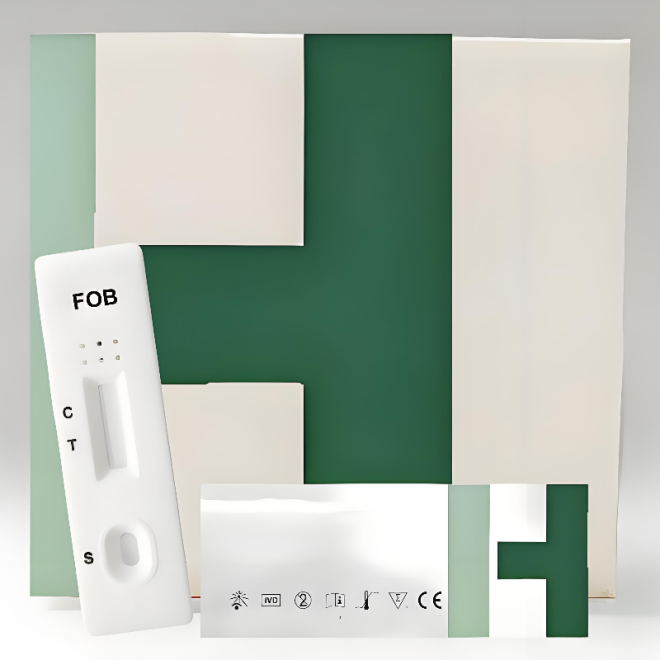
Staring at your tumor marker rapid test like it’s an alien gadget? You’re not alone—those tiny strips, mysterious lines, and scientific terms can turn anyone into a very confused at-home “lab technician.”
To fix this, learn each step of how the test works, what the lines mean, and when to trust the result. Follow clear, simple guides and compare them with expert sources like this American Cancer Society report.
🔬 What Tumor Marker Rapid Tests Are and When They’re Used
Tumor marker rapid tests are simple blood tests that help detect specific proteins linked to certain cancers. They support early screening, treatment monitoring, and follow-up checks.
Doctors often combine these tests with imaging and clinical exams. They do not replace full lab diagnostics but give fast, helpful clues at the point of care.
1. Basic Principle of Tumor Marker Rapid Tests
These tests use antibodies that “recognize” tumor markers in blood. When markers are present, they bind to reagents in the strip and form visible lines.
- Use whole blood, serum, or plasma
- Run at room temperature
- Give results in about 10–20 minutes
2. When Clinicians Use Tumor Marker Rapid Tests
Clinicians use them to support cancer risk checks, monitor treatment response, and watch for possible recurrence during long-term follow-up visits.
- Initial risk screening in clinics
- Monitoring therapy over time
- Checking for relapse signals
3. Common Tumor Markers Detected
Many rapid tests target well-known markers that link to cancers of the liver, ovary, prostate, and digestive system.
| Marker | Main Related Cancer |
|---|---|
| AFP | Liver cancer |
| CEA | Colorectal and other cancers |
| CA125 | Ovarian cancer |
| PSA | Prostate cancer |
4. Limits and Role in Diagnosis
These tests support but do not confirm cancer diagnosis alone. Results always need clinical review and, if needed, lab testing and imaging.
- May show false positives or negatives
- Best used as part of a full workup
- Guide next diagnostic steps
🩸 From Sample Collection to Applying Blood on the Test Cassette
The test starts with careful blood collection and correct use of the test cassette. Clean technique and timing greatly affect the reliability of the final result.
Following the steps in order helps avoid errors. Staff should always read the instructions for the specific cassette and tumor marker type.
1. Collecting the Blood Sample Safely
Use sterile tools and follow infection control rules. This keeps the sample stable and protects both patient and healthcare worker.
- Disinfect puncture site
- Use proper lancet or needle
- Collect required volume only
2. Separating Serum or Using Whole Blood
Some tests accept whole blood, while others need serum or plasma. The choice depends on test design and local workflow.
| Sample Type | Typical Use |
|---|---|
| Whole blood | Fast point-of-care testing |
| Serum | More controlled lab setting |
3. Applying Sample and Buffer to the Cassette
Place the cassette on a flat surface, add the exact number of drops of blood, then add the buffer drops as described in the instructions.
- Check cassette expiry date
- Do not touch sample well with pipette tip
- Start timing as soon as sample is added
4. Flow Time and Visual Check
The mixture flows along the strip by capillary action. A control line should appear to show the test ran correctly before reading result lines.
⚗️ How Reagents Bind to Tumor Markers Inside the Test Strip
Inside the strip, antibodies and color particles work together to capture tumor markers and create clear, easy-to-read lines on the membrane.
This reaction is highly specific, which helps reduce interference and improves the reliability of the tumor marker rapid test results.
1. Labeled Antibodies in the Conjugate Pad
The conjugate pad holds antibodies linked to colored particles. When blood enters, tumor markers bind these labeled antibodies to form moving complexes.
- Dry-stored reagents
- Activated on contact with sample
- Form antigen–antibody complexes
2. Capture Lines on the Nitrocellulose Membrane
Further along, fixed capture antibodies grab the complexes, forming the visible test line. The density of this line reflects marker level range.
| Line | Function |
|---|---|
| Test line | Binds marker–antibody complexes |
| Control line | Confirms valid fluid flow |
3. Role of the Control Line
The control line captures excess labeled antibodies, proving the reagents worked and the sample migrated correctly through the test strip.
- Must always appear
- Absence makes test invalid
- Independent of tumor marker level
📊 Reading Lines, Understanding Positive and Negative Test Results
After the set reaction time, you read the test by checking both the control line and the test line area under good light.
Do not read too early or too late, as this can cause weak, misleading, or background lines that affect interpretation.
1. What a Valid Test Looks Like
A valid test always shows a clear control line. If the control line is missing, the result cannot be trusted and you must repeat the test.
- Control line present = valid
- No control line = invalid
- Retest with a new cassette
2. Positive, Negative, and Borderline Patterns
Positive results show both control and test lines. Negative results show only the control line. Faint lines may need clinical review and retesting.
| Pattern | Meaning |
|---|---|
| C + T lines | Positive for marker |
| C line only | Negative |
| No C line | Invalid test |
3. Confirming and Following Up Results
Always interpret lines together with symptoms, history, and other tests. Doctors may order lab assays or imaging to confirm abnormal rapid test findings.
- Never self-diagnose cancer
- Use results to guide next steps
- Follow medical advice for follow-up
✅ Ensuring Accuracy: Storage, Timing, and Choosing Reliable HUATHENA Tests
Proper storage, exact timing, and the use of high-quality products are key for getting dependable tumor marker rapid test results.
HUATHENA tumor marker rapid tests follow strict quality control standards to support accurate, consistent performance in clinics and laboratories.
1. Correct Storage and Handling
Keep tests in a cool, dry place, away from direct sunlight. Do not freeze them or use kits after the listed expiration date.
- Store at recommended temperature
- Keep foil pouches sealed
- Use quickly after opening
2. Timing and User Technique
Use a timer to read at the recommended minute mark. Incorrect drop volume or delayed reading can change line strength and mislead users.
| Factor | Impact on Result |
|---|---|
| Too much sample | Smearing, unclear lines |
| Too little buffer | Poor flow |
| Late reading | Possible false lines |
3. Selecting Reliable HUATHENA Tumor Marker Tests
Choose trusted products like HUATHENA kits, which provide clear instructions, strong control lines, and validated performance data for a wide range of tumor markers.
Explore the full range of Tumor Marker Rapid Test Products to match specific clinical needs and marker panels in your practice.
Conclusion
Tumor marker rapid tests offer fast, simple insight into key cancer-related markers. They support early detection, treatment tracking, and long-term patient monitoring.
Correct sampling, strict timing, and quality products like HUATHENA tests help ensure dependable results that doctors can safely use to guide next diagnostic steps.
Frequently Asked Questions about tumor marker rapid test
1. Can a tumor marker rapid test diagnose cancer on its own?
No. These tests cannot confirm cancer alone. Doctors always combine results with symptoms, imaging, and laboratory assays before making any diagnosis.
2. How long does it take to get tumor marker rapid test results?
Most kits provide results in about 10–20 minutes after adding the sample and buffer, as long as the test runs at the recommended temperature.
3. Do I need to fast before a tumor marker rapid test?
Usually, fasting is not required. However, follow your doctor’s or laboratory’s instructions, as some combined panels may have specific preparation rules.
4. What should I do if I get a positive rapid test result?
Stay calm and contact your doctor. A positive result means you need further evaluation, not that you surely have cancer.
5. Are tumor marker rapid tests accurate?
High-quality kits, when stored and used correctly, offer reliable screening support. Still, no test is perfect, so confirm abnormal results with additional methods.