


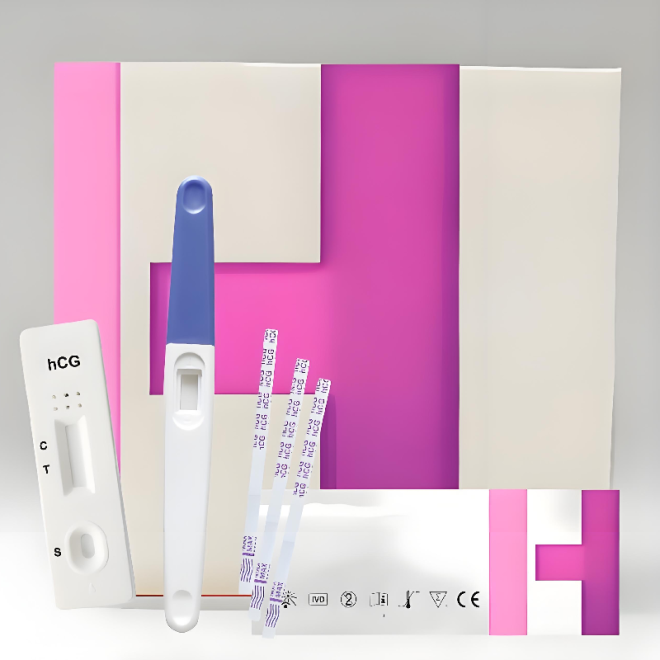
Ordering OEM rapid test kits shouldn’t feel like guessing how many snacks to bring to a party—too few and you’re stuck, too many and your budget cries in the corner.
By understanding minimum order quantities, you can plan smart, cut waste, and protect margins (WHO procurement guidance).
🧪 Defining Minimum Order Quantities for OEM Rapid Test Kit Projects
Minimum Order Quantity (MOQ) is the smallest production volume a factory can offer at a stable cost and quality. For OEM rapid test kits, clear MOQ planning protects margins and ensures reliable delivery.
By setting suitable MOQ levels early, HUATHENA helps you design private‑label rapid tests, secure Rapid diagnosis accessories, and enter new markets with controlled risk.
1. Why OEM Rapid Test MOQ Matters for Your Business Plan
MOQ directly shapes launch timing, pricing, and cash flow. A higher MOQ may reduce unit price but demands more capital and warehouse space.
- Aligns with forecast demand and tender volumes
- Supports regulatory batch validation needs
- Prevents frequent small orders that slow scale-up
2. Typical MOQ Ranges for HUATHENA OEM Projects
MOQ ranges depend on product type, format, and customization level. Complex markers and special packaging usually require higher volumes.
| Product Type | Common MOQ Range |
|---|---|
| Standard strip or cassette kits | 5,000 – 20,000 tests |
| Cardic Markers Rapid Test Products | 10,000 – 30,000 tests |
| Tumor Marker Rapid Test Products | 10,000 – 40,000 tests |
3. Customization Level and Its Effect on MOQ
Branding and technical changes raise setup complexity, so MOQ often increases to cover tooling and validation time.
- Box, pouch, IFU artwork and languages
- Special buffer, swab, or reader needs
- Clinical performance or cut-off adjustments
4. Regulatory and Quality Factors in MOQ Decisions
IVD regulations and quality systems require minimum batch sizes for validation, stability, and retention samples, which naturally define a base MOQ.
- Stability studies across shelf life
- Performance verification and documentation
- Retain samples for complaint handling
📦 Factors That Influence MOQ Requirements in Rapid Diagnostic Kit Manufacturing
MOQ for OEM rapid tests is not fixed. It comes from a mix of material sourcing, automation level, demand forecast, and compliance needs.
By understanding these factors, importers and distributors can negotiate realistic MOQ terms that keep both costs and service levels under control.
1. Core Cost Drivers Behind MOQ
Material price breaks, machine changeover time, and labor inputs strongly shape MOQ. Larger batches usually spread fixed costs more efficiently.
2. Supply Chain and Raw Material Constraints
Key components like nitrocellulose membrane and conjugates often come with supplier MOQs, which pass through to your finished kit MOQ.
- Bulk membrane rolls and gold conjugates
- Special plastics and printed pouches
- Lead time and expiry of reagents
3. Market Demand and Sales Channel Planning
MOQ must match realistic sales speed. Slow-moving assays should avoid very high MOQ to reduce write-off risk.
| Channel | MOQ Tendency |
|---|---|
| Hospital tenders | Higher, stable volumes |
| Pharmacy retail | Medium, more SKUs |
| Online and niche labs | Lower, trial-friendly |
4. Packaging, Labeling, and Language Versions
Multiple languages or small lot labels push up MOQ because each unique design adds setup, printing, and storage complexity.
- Grouped languages to share artwork
- Common IFU with regional stickers
- Standardized kit formats across markets
📈 Balancing MOQ, Production Costs, and Inventory Risk for OEM Partners
OEM buyers must balance low unit cost with flexible stock levels. Smart MOQ planning reduces cost while keeping cash and expiry risk manageable.
HUATHENA works with partners to model scenarios and pick MOQ levels that work for both launch phase and mature demand.
1. Using Stepwise MOQ for Different Growth Stages
Start with lower MOQ during market testing, then increase volume after demand proves stable and reimbursement paths are clear.
- Pilot lots for registration or KOL feedback
- Scaled lots once tenders are secured
- Annual volume reviews to adjust MOQ
2. Calculating Inventory and Expiry Risk
Consider shelf life, forecast accuracy, and storage costs when selecting MOQ so you do not hold stock that may expire unused.
3. Negotiating Win–Win Pricing Structures
Tiered pricing by volume and long-term forecasts help set fair MOQ levels while keeping factory loading and your landed cost in balance.
| Annual Volume | MOQ per Order | Price Trend |
|---|---|---|
| < 50k tests | 5k – 10k | Base |
| 50k – 200k | 10k – 20k | Lower |
| > 200k | 20k+ | Lowest |
🤝 How Flexible MOQ Terms Support Long-Term Cooperation with HUATHENA
Flexible MOQ options help new brands grow safely while keeping factories efficient. This flexibility is key to stable, long-term OEM partnerships.
HUATHENA adapts MOQ by project stage, country, and product mix to support sustained cooperation instead of short-term deals.
1. Starter MOQs for New Market Entry
For new distributors or new product lines, HUATHENA can offer moderate MOQ to allow real-world market testing before bigger commitments.
2. Consolidated Orders Across Multiple Assays
Partners can bundle different markers into one production plan, helping reach economic batch sizes without overstocking any single SKU.
- Combine infectious disease and chronic markers
- Share packaging formats where possible
- Plan quarterly or semiannual joint orders
3. Long-Term Framework Agreements
With forecast-based agreements, HUATHENA may keep stable MOQ while reserving capacity, ensuring priority supply during demand peaks.
| Term | Benefit |
|---|---|
| 12–36 month plan | Stable MOQ and pricing |
| Rolling forecast | Capacity planning |
| Review clauses | Adjust to market changes |
📝 Practical Steps to Determine Suitable MOQ Levels for Your HUATHENA Kits
Choosing the right MOQ starts with clear demand data, risk limits, and product strategy. Structured discussion with HUATHENA turns these into firm numbers.
The steps below help you arrive at MOQ levels that support both profitability and reliable local supply.
1. Analyze Your Demand and Channel Mix
Collect historic sales, tender forecasts, and launch plans. Match each OEM assay to its expected volume and growth speed.
- Split by hospital, lab, retail, and online
- Identify seasonal or outbreak-driven tests
- Flag high-uncertainty products for lower MOQ
2. Map Regulatory and Registration Timelines
Plan MOQ around registration batches and expected approval dates so kits do not sit in storage while paperwork is pending.
3. Co-Create an MOQ and Reorder Strategy with HUATHENA
Share your data with HUATHENA to agree on MOQ, safety stock, and reorder points, then review results regularly and refine.
| Item | Typical Outcome |
|---|---|
| Initial MOQ | Based on first-year forecast |
| Reorder trigger | 2–4 months of sales left |
| Review cycle | Every 6–12 months |
Conclusion
Thoughtful MOQ planning is central to successful OEM rapid test kit projects. It links factory efficiency, landed cost, and product availability in your market.
By working closely with HUATHENA on demand data, regulatory needs, and product mix, you can set MOQ levels that protect profit while keeping inventory risk under control.
Frequently Asked Questions about rapid test products
1. What is MOQ for a new OEM rapid test kit?
MOQ depends on assay type, customization, and regulatory needs. For many OEM rapid tests, starting MOQ ranges from 5,000 to 20,000 tests per product.
2. Can HUATHENA reduce MOQ for first trial orders?
Yes. For market testing, registration, or key customer evaluation, HUATHENA can discuss lower initial MOQ under clear growth and forecast plans.
3. How does packaging design affect MOQ?
Each unique box, pouch, or language version adds setup cost. Fewer designs usually mean lower effective MOQ and better unit pricing.
4. What shelf life do HUATHENA rapid tests usually have?
Most rapid test kits offer 18–24 months of shelf life when stored correctly. Exact validity depends on product type and regulatory registration.
5. How often can MOQ terms be reviewed?
MOQ is normally reviewed every 6–12 months or when your annual volume, tender wins, or product portfolio changes in a major way.